
How many AI subscriptions are you actually paying for right now? If the answer is more than one, you're not alone — and you're almost certainly spending more than you need to. Here's what the best AI subscription for college students looks like in 2026, once you do the real math.
The $60 Problem: Why Paying for ChatGPT, Claude, and Gemini Separately Stops Making Sense
Most students who actually use AI for coursework end up paying twice. Sometimes three times.
One month it's ChatGPT Plus for brainstorming. The next month, Claude Pro goes in because it handles long essays better. Then Google AI Pro sneaks in because it's tied to Google Docs. A semester later the subscription bill is pushing $60 and you're still copy-pasting the same PDF into three different windows.
So what's actually the best AI subscription for college students in 2026? This post breaks down what $20 plans really cover, where the hidden costs show up, and whether there's a cleaner option if essays, research, and PDFs are most of what you do.
Last updated: April 2026.
Why ChatGPT Plus, Claude Pro, and Gemini all cost the same $20
Every major AI company landed on roughly the same number, and that isn't an accident. ChatGPT Plus is $20/month. Claude Pro is $20/month. Google AI Pro (formerly Gemini Advanced) is $19.99/month. Perplexity Pro is $20/month. OpenAI also added ChatGPT Go at $8/month for lighter users earlier this year.
The $20 mark is the price each company has decided a premium AI plan is worth, and they're all betting you'll pick one. The problem is that most students don't pick one. They pick the model they need today, and a few weeks later they add a second when the first one hits a wall on something specific.
Here's the rough reputation of each model among students I've talked to:
Claude Sonnet is the go-to for long essays, PDFs, and careful structure.
GPT-5.4 handles brainstorming, image generation, and quick conversational tasks better.
Gemini 3 wins if you live inside Google Docs and want live web results.
DeepSeek is a quiet favorite for code and math-heavy work.
None of them is bad. They're just good at different things, which is exactly why the subscription pile grows.
Why rate limits push students onto a second subscription
A single $20 plan feels generous until you actually push it during exam season.
ChatGPT Plus caps at about 150 GPT-5.4 messages per 3-hour window. Claude Pro doesn't publish exact numbers, but users consistently report around 100–150 messages per 5-hour window before the rate limiter kicks in. Both are fine for casual use. Neither is fine at 1 AM the night before a 10-page paper is due, when you're feeding the tool your lecture notes and revising three drafts.
When you hit that ceiling on Claude, the obvious move is to open ChatGPT. So either you pay for both, or you lose momentum waiting for the timer to reset. The first option is expensive. The second is worse.
The real hidden cost of stacking AI subscriptions
Paying $60 across three subscriptions isn't the worst part. The worst part is what happens between the subscriptions.
A typical essay-night workflow, timed
Picture this setup (probably familiar):
Draft an essay in Google Docs.
Paste a section into Claude for feedback.
Hit the rate limit around midnight.
Open ChatGPT, re-upload your lecture PDFs, re-paste the instructions, re-ask the question.
Copy the response back into Docs.
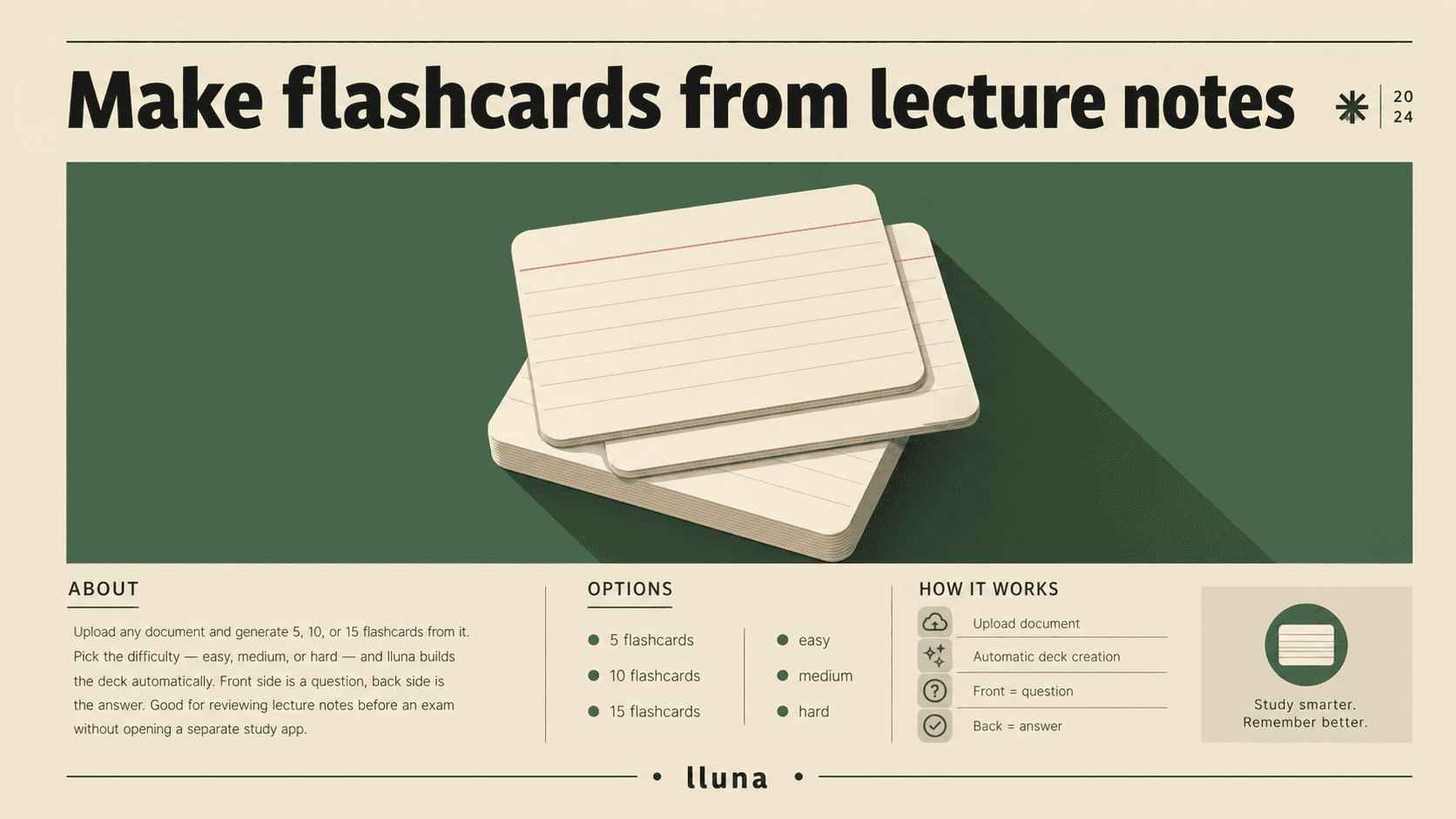
Turn your lecture PDF into 10 flashcards in the same window you were just writing in. No separate app, no copy-pasting.
Run it through Grammarly too, because why not.
Every switch costs you file uploads, lost context, and the five minutes it takes to get the new tool caught up on what the last one was doing. You're paying for the models, and then paying again with time.
When students ask me which AI subscription is cheapest, I usually tell them the sticker price isn't where the real cost lives. The real cost is the 20-minute tax every time you change tools.
The best AI subscription for college students is the one that bundles the workflow
This is where lluna.app comes in. Full disclosure: we built it because we were the students doing the copy-paste routine, and it got old.
lluna is one subscription, $25/month, that gives you:
GPT-5.4
Claude Sonnet 4.6
Gemini 3
DeepSeek v3.2
All four live in the same window. You can switch models mid-conversation without re-uploading your document or re-explaining the assignment. If Claude slows down, you click over to GPT and keep going with the same context the conversation already has.
What one $25 subscription actually replaces
Here's the side-by-side on what students usually stack vs. what one plan bundles:
What you'd normally pay for | Typical cost | Covered inside lluna |
|---|---|---|
ChatGPT Plus (GPT-5.4) | $20 | ✓ Built in |
Claude Pro (Claude Sonnet 4.6) | $20 | ✓ Built in |
Google AI Pro (Gemini 3) | $19.99 | ✓ Built in |
DeepSeek v3.2 access | varies | ✓ Built in |
Flashcard generator from documents | varies | ✓ Built in (5, 10, or 15 cards, easy/medium/hard lvl's) |
Autosaving document editor | varies | ✓ Writing Space |
Deadline tracker | scattered | ✓ Live countdown per assignment |
PDF/assignment analyzer | free but fragmented | ✓ Assignment Analyze |
That's roughly $70+ of tools consolidated into $25, and the real win isn't the math. It's that the essay, the PDF lecture notes, the model you're chatting with, and the deadline countdown all live in one window. No tab-switching. No re-uploading.
If you want to brainstorm an intro with GPT, sanity-check the argument with Claude, and then pull direct quotes from your lecture PDF using Assignment Analyze, you do it in the same session without closing anything.
When a single $20 plan is still the right call
I should be honest about when lluna isn't the right answer.
If you're a CS student building projects directly on the Claude or OpenAI APIs, Claude Pro or Plus is probably still what you want. If you use ChatGPT's image generation daily or rely on its Memory feature across hundreds of conversations, Plus makes sense on its own. If your university is a Google Workspace school and you live in Docs and Slides, Google AI Pro will probably cover you.
The case for bundling is strongest when the bulk of your work is essays, readings, research, and deadlines. That describes most undergraduates in humanities, business, social sciences, pre-med, and pre-law.
The bottom line on the best AI subscription for college students
The best AI subscription for college students in 2026 is the one that covers the most of your actual workload for the least money. If a single $20 plan does that, keep it.
If you've already started layering subscriptions to cover gaps, the math gets harder to defend. $25 for four flagship models plus the writing, research, and deadline tools most students use is worth a 14-day side-by-side against what you're paying now.
FAQ
Q: Is $25 a month actually cheaper than ChatGPT Plus at $20?
Per dollar, yes, if you use more than one model. ChatGPT Plus gives you GPT-5.4 only. lluna is $25 for GPT-5.4, Claude Sonnet 4.6, Gemini 3, and DeepSeek v3.2, plus a flashcard generator and document editor. You break even the moment you would've otherwise signed up for Claude Pro or Google AI Pro.
Q: Which AI model is best for writing college essays?
Claude Sonnet 4.6 is the most common recommendation for long-form essay work because it holds context well and produces cleaner structure. GPT-5.4 is usually better for brainstorming and shorter responses. Most students use both at different stages of the same paper.
Q: Can I turn my lecture notes or readings into flashcards inside lluna?
Yes. Upload any document and choose how many cards you want — 5, 10, or 15 — and the difficulty level (easy, medium, or hard). lluna generates them automatically. The front of each card is a question, the back is the answer. Works on PDFs, lecture slides, anything you upload.
Q: Can I just use the free versions of ChatGPT and Claude?
You can, and the free tiers are better than they used to be. The catch is daily caps, slower models, and limited file uploads. For one paper a semester, free is fine. For daily coursework, you'll hit walls fast.
Q: What if I only need AI during finals?
All these subscriptions, lluna included, bill monthly. Subscribe during a heavy month and cancel after. That's usually a smarter move than paying year-round for a tool you touch twice.
Q: How is lluna different from just using ChatGPT with file uploads?
ChatGPT gives you one model. lluna gives you four, plus a built-in writing editor that autosaves, a flashcard generator that turns any uploaded document into study cards (5, 10, or 15, with easy/medium/hard difficulty), a deadline tracker, and a PDF/assignment analyzer that pulls answers from your own documents without needing a prompt every time. It's built around a student workflow, not a general chat interface.
CTA
If you're already paying $40+ across two or three AI subscriptions, try running a full week of assignments inside lluna.app for a month. If it saves you time and the math works out, stay. If it doesn't, cancel. That's the cleanest way to find out whether bundling is worth it for your workload.